Intro: Supermarket Shelf Shortage Is A Common Pain For Brand Merchandising
Walk into any local supermarket chain these days, and you will spot a shared problem. Retail store owners face tight shelf real estate as more consumer brands flood market shelves. Brand managers often complain their full-size display fixtures get rejected by shop operators. DDL has spent years solving this exact conflict between brand showcase needs and retail space limits. This post breaks down our practical, factory-side adjustment methods for SPCC steel POS display structures, plus real cases for beauty, hardware and daily goods brands. We also embed core SEO keywords: custom metal POS display stand, SPCC steel retail shelf, in-store merchandising fixture, supermarket limited space display rack, brand POP display solution.
1. Pre-Design Data Collection: Match Rack Size To Exact Supermarket Shelf Dimensions
Before drawing any display structure drafts, our design team first collects precise shelf data from the target supermarket clients. Many brand clients skip this step and send generic display rack orders, which later fail retail space checks. First, we ask store operators to share three core measurements: single shelf depth, aisle width between shelf rows, and vertical clearance under overhead light panels. Next, our engineers cross-check these numbers against our standard SPCC steel frame moulds. If the supermarket shelf depth only hits 22cm, we scrap our regular 30cm deep display base immediately. Instead, we narrow the rack’s back panel while keeping front product holding slots fully intact. Besides flat shelf measurements, we also record movable checkout counter sizes. Small checkout zones can only fit slim countertop POS stands instead of tall floor display units. This upfront data step cuts post-production rework by nearly 60% for our bulk factory orders.
2. Slim Down SPCC Steel Frame Without Cutting Product Loading Capacity
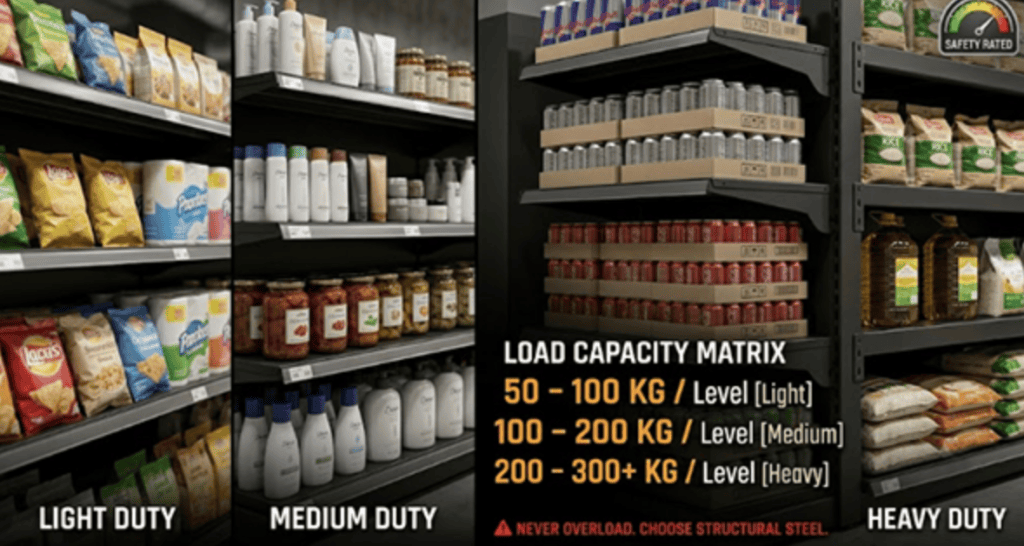
Most supermarket buyers fear slim display racks will bend or collapse under stocked goods. Our factory adjusts internal steel structures to fix this worry without widening the overall rack footprint. We switch thick solid side beams to reinforced hollow SPCC steel tubing with internal rib supports. This tweak slashes the frame’s side width by 4cm while keeping a 35kg uniform load limit per tier. For beauty brand displays holding glass skincare bottles, we replace full metal backboards with perforated thin steel sheets. The perforated design removes excess material weight and shrinks the rack’s total depth. Transitionally, we also adjust tier spacing for space-strapped supermarkets. Instead of fixed 30cm vertical gaps between layers, we add sliding adjustable brackets. Store staff can shrink gaps for small items like lipsticks or widen them for large facial cream jars on demand. All slimmed frames pass our factory’s 72-hour weight durability test before shipment to retail partners.
3. Split Modular Display Structures For Easy Storage & Flexible Space Placement
Single whole-piece display racks struggle to fit narrow supermarket aisles during delivery and daily restocking. Our factory redesigns full display units into detachable modular parts to adapt limited shelf zones. Each module locks together via hidden steel snap joints, no extra screws or installation tools required. Small 1x1m modules fit side-by-side on compact back shelves, while single slim modules work alone on checkout counters. When a supermarket runs a limited-time promotion, staff can combine two modules for a temporary endcap display. Conversely, during slow sales weeks, they split the unit and store half the modules in backstock storage rooms. Modular design also lowers shipping costs for brands with multiple supermarket outlets. Our metal workshop pre-marks each module with matching serial numbers to speed up on-site assembly for retail workers. This split POS display solution ranks as our top-selling custom design for regional supermarket chains with scattered small-format stores.
4. Replace Solid Base Panels With Hanging Wall-Mount & Clip-On Counter Fixtures
Floor-standing display racks take up precious ground shelf space, a major issue for mini-supermarkets with narrow walkways. Our factory expands two space-saving structural alternatives to cut ground footprint entirely. First, wall-mounted SPCC steel display racks hook onto existing supermarket shelf backboards via heavy-duty metal clips. The wall fixtures hold packaged snacks or cosmetic boxes without touching floor space at all. Second, we produce clip-on counter POS stands that fasten directly onto existing supermarket shelf edges. These clip-on units only extend 12cm outward, leaving full shelf depth free for regular store merchandise. To boost stability for wall-hung racks, our weld team adds reinforced triangular support brackets at every load tier. Transitionally, we offer mixed sets: small clip-on counter fixtures paired with short wall-mounted racks for brands launching multi-product lines in cramped convenience supermarket locations.
5. Custom Tier Layouts: Prioritize High-Selling SKUs To Reduce Unnecessary Rack Layers
Many brand clients request 6–8 tier full display racks, yet supermarkets lack vertical clearance for tall units. Our factory’s merchandising consultants work with brand sales teams to trim redundant rack tiers based on sales data. We identify top 3 high-turnover SKUs and build dedicated wider holding tiers for those items. Slow-moving minor products get grouped onto one shared narrow tier to cut total rack height by one full layer. For example, a hardware brand selling metal storage hooks only needed three core tiers, so we removed two unused layers from their original display draft. We also adjust front lip heights on each tier to avoid oversized guard rails that eat shelf space. Short 1cm front lips stop goods sliding off without adding extra depth to the SPCC steel rack frame. This tier layout tweak ensures the final display structure fits standard 180cm vertical supermarket shelf limits every single production run.
6. Lightweight Material Upgrades Cut Overall Rack Volume For Tight Aisle Transit
Heavy thick steel frames create two space headaches: wider rack bodies and difficult movement through narrow supermarket aisles. Our factory balances structural strength with compact sizing by mixing standard SPCC steel with thin gauge galvanized sheet parts for non-load-bearing sections. The front product holding frame stays thick SPCC steel for durability, while side decorative panels switch to lightweight thin metal sheets. We also remove bulky solid metal header signs and replace them with slim magnetic acrylic brand name plates. The acrylic signs stick flat to the rack front without adding depth to the display unit. After these material upgrades, each finished POS display stand weighs 22% less than traditional solid steel racks. Lighter, slimmer racks slide easily through 90cm narrow supermarket aisles without scratching surrounding shelf edges or requiring extra aisle clearance.
7. Real Factory Case: Custom Metal POS Display For A Local Beauty Supermarket Chain
A regional beauty supermarket chain reached out to our workshop last year with strict shelf limits: all in-store displays must stay under 20cm total depth. Their original ordered full-size display racks measured 32cm deep and could not fit existing shelf rows. Our design team applied all six adjustment methods above to rework the SPCC steel structure. We slimmed the frame, split the rack into three modular pieces, removed two redundant product tiers, and added clip-on counter fixtures for mini skincare sets. We also swapped solid back panels for perforated thin steel sheets to shrink rack depth drastically. The revised custom metal POS display stand hit a total depth of 18cm, fully compliant with the supermarket’s space rules. After two months of in-store testing, the brand reported a 17% lift in product visibility without sacrificing any stocked item capacity. This case proves factory-side structural adjustments fully resolve limited shelf space conflicts for retail brand merchandising.