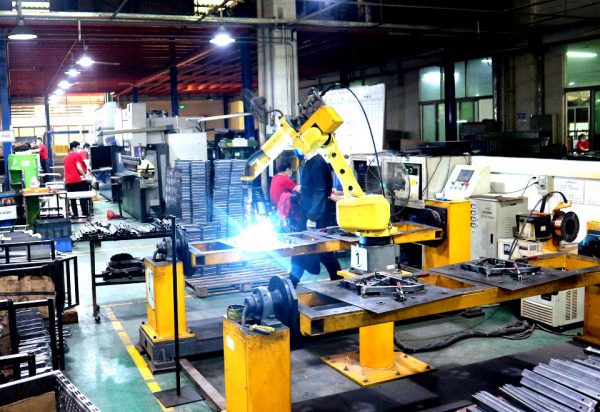
Introduction: Why retail metal display factories pursue intelligent upgrades
Many overseas buyers focus on price and lead‑time for custom retail fixtures. They seldom look deep into a factory’s real‑production hardware conditions. Traditional manual workshops struggle with inconsistent dimensions and unstable output. Even experienced workers can create small errors during repeated metal‑frame processing. For this reason, more Chinese fixture manufacturers invest in intelligent production lines. These upgrades bring tangible benefits for both factories and global brand buyers. Verified Factory Showroom (Made‑in‑China):https://www.made‑in‑china.com/showroom/gpmetalwares
Pain points of traditional manual metal‑display production
Manual metal‑display processing relies heavily on skilled workshop operators. Worker fatigue easily causes dimension deviations for metal frame components. Welding quality may shift from batch to batch under human‑driven workflows. Moreover, manual operations slow down turnaround for mixed‑material custom orders. Custom retail displays often combine metal, wood and acrylic parts. Mixed‑batch orders create extra pressure for old‑style production setups. Besides quality risks, high labour costs also squeeze profit margins for fixture suppliers. As a result, delivery delays and inconsistent finished‑goods become common complaints among importers.
Core intelligent equipment applied in retail metal‑display workshops
Laser cutting machines stand as one key piece of intelligent workshop hardware. They deliver clean, precise cuts for SPCC steel and other metal sheet materials. Next, precision CNC bending machines replace old manual bending tools. These machines lock in fixed parameters for every custom fixture drawing. CNC engraving units handle logo grooves and special‑shape component processing. Meanwhile, automated high‑temperature baking paint lines manage surface finishing work. Silk‑screen printing stations and UV digital‑printing machines support brand‑mark customization. LED assembly workshops and independent quality‑testing labs complete the smart‑production setup. All these devices build a connected chain for custom retail‑display manufacturing.
How intelligent lines improve dimensional consistency for custom fixtures
First of all, intelligent equipment follows digital drawing data without human guesswork. Every metal‑frame cutting and bending step sticks to pre‑loaded drawing parameters. Even large‑volume orders keep tight tolerance across all production batches. In addition, automated workflows reduce burrs and uneven welding spots on metal structures. Therefore, semi‑finished inspection work becomes simpler for in‑house QC teams. Factories can catch structural flaws at early production phases. What is more, pre‑assembly testing runs more smoothly with uniformly‑made components. Buyers receive fixtures that fit perfectly during in‑store installation overseas. This consistency cuts down after‑sales headaches for retail‑brand partners.
Impacts of smart‑production upgrades on OEM and ODM project lead times
Custom retail‑display projects face tight launch schedules for many global retailers. Smart production lines shorten cycle times for both sample runs and mass‑batch production. Automated material cutting and molding speed up early‑stage component processing. At the same time, equipment can switch quickly between different custom‑fixture designs. This flexibility suits mixed‑order OEM and ODM manufacturing demands. Even so, peak‑season workloads still require reasonable project scheduling from buyers. Although intelligent hardware lifts total capacity, order volume spikes still create pressure. Hence, buyers should confirm realistic lead‑time targets before formal order placement.
Quality control synergy between smart‑equipment and multi‑layer inspection systems
Intelligent hardware cannot remove all risks on its own. It must pair with strict multi‑layer quality‑control workflows. Raw‑material incoming checks still validate steel, wood and acrylic sheet specifications. Semi‑finished structural‑stability testing works alongside machine‑processed outputs. Surface‑texture matching, light‑function aging tests and load‑bearing checks remain essential steps. Every retail‑display fixture gets fully assembled and tested before packing. Smart equipment lowers error rates, while human QC catches non‑standard hidden defects. Together they greatly reduce defective‑goods shipped to overseas destination ports. This combination gives importers far more reliable project outcomes.
Real‑world benefits for overseas buyers sourcing smart‑factory retail displays
Buyers gain multiple practical advantages when they select intelligently‑upgraded fixture factories. First, custom‑product dimension accuracy improves for complex POS‑display structures. Second, surface‑finish quality stays stable across large‑size wholesale batches. Third, qualified smart factories can handle complex mixed‑material custom‑display requests. Furthermore, reliable output lowers the risk of costly rework and shipment postponements. Even sample‑development cycles become faster with digital‑driven production workflows. Nevertheless, buyers still need to share clear tech‑packs and drawing files with suppliers. Smart machines cannot compensate for unclear design or requirement documents.
Points buyers should check when evaluating factory intelligent‑upgrade levels
You do not need professional engineering knowledge to judge factory hardware levels. You can ask suppliers for short workshop‑tour videos during supplier screening. Request clear photos of laser‑cutting, CNC‑bending and surface‑treatment production lines. Besides hardware, check whether the factory has complete QC‑lab facilities. Also confirm if the plant holds relevant management‑system certifications such as ISO 9001. On top of that, ask for real‑case references for similar custom‑retail‑display projects. These simple checks help you filter factories with real intelligent‑production capabilities. Avoid suppliers who only advertise upgrades without supporting workshop evidence.
Conclusion: Intelligent upgrade shapes the future of retail‑display manufacturing
Intelligent‑production‑line upgrades keep reshaping China’s custom‑retail‑display industry. They solve long‑standing pain points from old manual‑based manufacturing workflows. Better precision, stable quality and flexible OEM‑ODM capacity bring value for global clients. Still, smart equipment works best when paired with strict human‑led quality control. When you source metal retail fixtures, treat factory hardware as a key evaluation factor. A truly upgraded factory balances advanced machines, mature QC rules and rich merchandising‑project experience. Verified Factory Showroom