How raw‑material choice impacts your retail POS display performance
Many overseas procurement teams only compare finished‑rack unit prices. Meanwhile, base metal raw material defines fixture durability and real‑store lifespan. A custom metal POS display stand lives or dies by its steel substrate quality. Correspondingly, both domestic and imported metal stock feed retail POP‑display production. Each material option brings distinct pros and trade‑offs for cross‑border buyers. To begin with, material quality affects pegboard tool hardware rack structural stability. It also shapes coating adhesion and anti‑rust performance for global retail locations. Verified Factory Showroom (Made‑in‑China):https://www.made‑in‑china.com/showroom/gpmetalwares sources both material grades for custom orders.
Quick overview: domestic and imported metal raw‑material definitions
For context, domestic raw materials mean steel coils produced inside China. Most heavy‑duty SPCC steel retail display fixture use local domestic steel. Secondly, imported raw materials originate from overseas steel mills. Common grades include Japanese SPCC and European cold‑rolled steel sheets. By contrast, imported batches carry tighter chemical and thickness tolerance rules. Additionally, domestic mills support flexible small‑volume material ordering for OEM jobs. Factories select grades based on project budget and target retail operating conditions. A cosmetic acrylic counter display mixes metal frames with decorative acrylic panels. Only the metal structural frame gets impacted by raw‑material origin. Transitively, imported origin alone cannot guarantee perfect finished‑fixture outcomes. Factory incoming QC matters equally for both material categories.
Surface quality and powder‑coating compatibility comparison
Surface condition directly impacts final paint finish on retail POS display racks. Meanwhile, premium imported steel delivers highly uniform flat surface texture. Its surface impurity count stays low for stable powder‑coating adhesion. Correspondingly, top‑tier domestic SPCC steel can achieve comparable smooth results. Yet low‑cost domestic batches may hold tiny pits or scattered surface inclusions. These small flaws can become visible under store lighting after several months. Furthermore, poor base surfaces trigger coating chipping on snack wood laminate shelf metal frames. On top of that, both material groups can pass standard salt‑spray anti‑rust testing. Still, imported raw material holds more consistent quality across large‑batch production runs. For context, a smart home floor demo fixture demands flawless metal surfaces. Visible blemishes will harm brand perception inside flagship retail spaces.
Load‑bearing strength and long‑term mechanical stability
Load‑bearing performance is critical for liquor spiral display rack and heavy‑load fixtures. Secondly, consistent material composition prevents unexpected fixture deformation in stores. Imported steel maintains narrow tolerances for thickness and hardness across batches. Every sheet delivers nearly identical mechanical properties for mass‑production. Correspondingly, high‑grade domestic steel mills also produce strong reliable metal sheets. By contrast, budget‑tier domestic steel may show wider thickness variation batch‑to‑batch. This risk matters for security camera retail showcase holding heavy glass panels. Unstable frame strength may slowly bring wobble or permanent fixture bending. Additionally, qualified factories run strict incoming‑material inspection for every steel delivery. They test thickness, hardness before cutting parts for your retail displays. This QC step narrows performance gaps between domestic and imported sources.
Cost, lead‑time and cross‑border supply‑chain risks
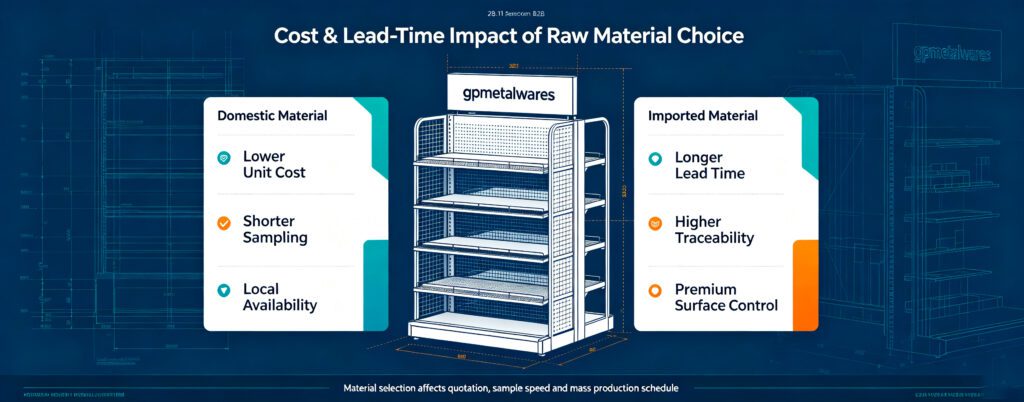
Material cost and supply risk heavily shape your overall project total budget. Meanwhile, imported steel adds ocean freight, tariff and customs clearance fees. These extra expenses push up final per‑unit price for POS display racks. Correspondingly, domestic steel enjoys fast local delivery cycles within China. Factories receive new stock within a handful of working business days. Secondly, imported raw material faces long sea transit and customs hold‑up risks. Supply‑chain disruptions can delay your whole POP‑display production timeline. On top of that, domestic steel supports flexible small‑batch material procurement. This suits trial‑run orders from new retail brands with limited volumes. Furthermore, global metal price swings hit imported steel more severely. Your quotation may shift even after project discussions are already underway. Many buyers overlook these hidden supply‑chain risks in early sourcing phases.
Best‑fit scenarios for domestic metal raw‑material selection
High‑quality domestic steel fits most standard retail POS‑display projects. To begin with, pick certified domestic SPCC for general‑purpose store fixture orders. It works reliably for pegboard tool hardware rack and custom metal POS display stand. Correspondingly, domestic material is ideal for projects operating under tight budget limits. Additionally, choose domestic steel when you face compressed production lead‑time windows. It also performs well for large‑volume national retail promotion campaigns. Transitively, always require factories to source from reputable domestic steel mills. Low‑grade domestic stock will create avoidable quality headaches for retail stores. For context, many cross‑border retail projects succeed with premium domestic steel. The key depends on strict incoming‑material QC managed by your manufacturing partner. gpmetalwares.com implements multi‑step material checks for all domestic‑steel‑based orders.
Best‑fit scenarios to select imported raw‑material grades
Imported metal raw materials serve special high‑requirement retail display projects. Meanwhile, imported steel excels for fixtures deployed in harsh retail environments. High‑humidity Southeast Asia shops or cold EU retail locations fall into this group. Correspondingly, imported steel suits flagship‑store cosmetic acrylic counter display builds. These premium locations demand zero surface defects and multi‑year stable performance. Secondly, select imported material for fixtures carrying constant heavy static load. Liquor spiral display rack and security camera retail showcase are typical examples. On top of that, imported steel helps reduce quality variance across multi‑location global roll‑outs. Furthermore, you must weigh extra material cost against your overall project ROI. Imported stock is not always necessary for every regular retail merchandising fixture.
Final takeaways: origin is not everything, factory QC makes real difference
In short, raw‑material origin forms only one piece of your sourcing decision. Both domestic and imported steel can build high‑quality retail POS display racks. Domestic steel brings cost‑savings and short lead‑times for most standard orders. Imported steel delivers tighter consistency for harsh‑environment or high‑end flagship use. Meanwhile, never judge material quality purely by its country‑of‑origin label. Unqualified processing can ruin even the highest‑grade imported steel sheets. Correspondingly, always ask your factory for material test reports for each batch. Confirm they run incoming‑material inspection before starting cutting work. Many buyers waste extra budget on imported steel without real project necessity. Match your material selection to store environment, budget and long‑term business goals. Visit Verified Factory Showroom (Made‑in‑China):https://www.made‑in‑china.com/showroom/gpmetalwares to discuss raw‑material options for your custom retail POS display racks.