Intro
If you import SPCC metal POS display racks from Dongguan factories, surface flaws hurt brand displays.
Uneven metal panels create dull, low-grade shelf visuals for beauty, electronics retail such as SONY.
Many small workshops skip precision steps, leaving bumpy, wavy rack surfaces after painting.
Qualified China display makers follow strict multi-stage processes to smooth all metal surfaces.
This post breaks down real workshop methods we apply for GP Metalwares custom display orders.
1. Source Flat SPCC Raw Sheets As The Base Foundation
Uneven surfaces often start long before cutting or bending the steel.
Cheap thin steel coils warp easily during storage and transport to small factories.
Our Dongguan factory only orders full-level flat SPCC sheets from certified steel suppliers.
We reject coils with hidden warping, dents or thickness irregularities right at receiving.
Workshop staff use straightening rollers to flatten every incoming steel plate first.
Even minor curve distortion gets corrected before any blanking or laser cutting work.
This single step cuts 60% of future surface bump issues on finished retail display racks.
2. Precision Laser Cutting & Deburring To Prevent Edge Distortion
Poor cutting creates jagged edges that pull metal into uneven shapes later.
Small factories use old mechanical shears which bend sheet sides while slicing steel.
Our team runs high-precision fiber laser cutters for all custom display frame parts.
Cut edges stay clean and flat without squeezing or warping the main panel area.
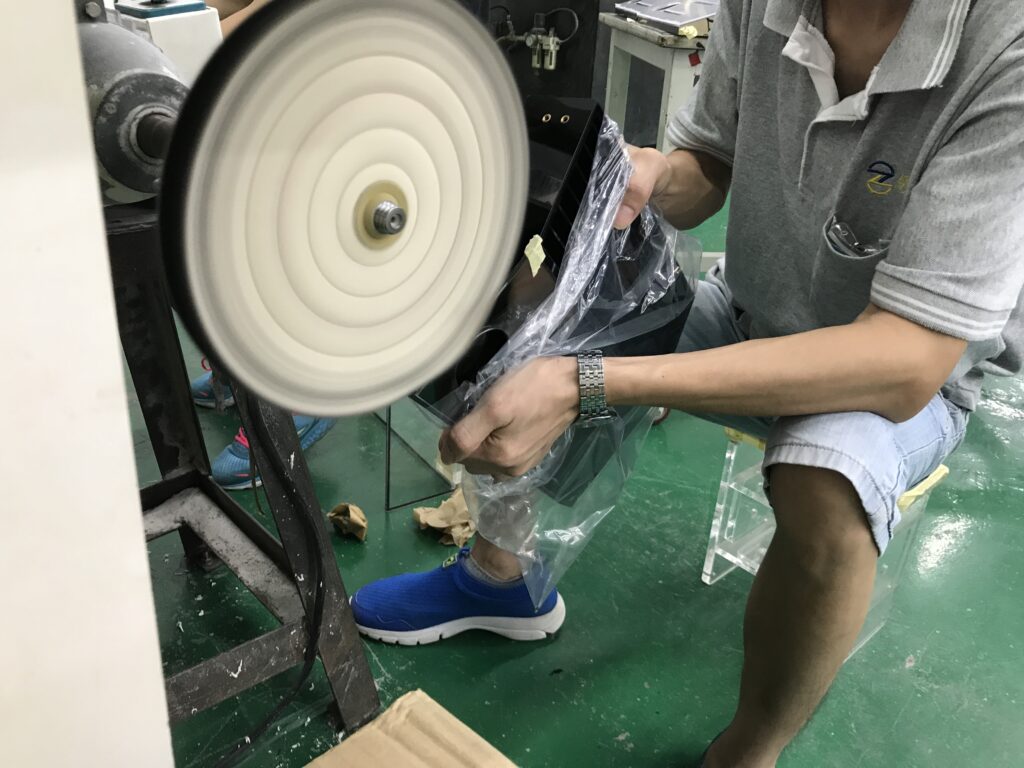
After cutting, every piece moves to automated deburring grinding stations.
Tiny metal burrs along edges get polished smooth to avoid surface tension warping.
We also separate thin and thick SPCC materials to stop cross-contamination scratches.
Transition tip: Next, controlled bending processes lock flatness for rack panels.
3. Controlled CNC Bending To Avoid Panel Wave Deformation
Improper bending pressure ranks as a top cause of wavy metal display surfaces.
Unskilled workers at small workshops crank up machine force to speed up orders.
Excess pressure stretches thin steel and leaves permanent uneven ripples on flat faces.
Our factory sets custom bending parameters for each SPCC gauge thickness.
CNC press brakes apply gradual, even pressure across the whole bend line only.
Operators place supporting jigs under large flat rack panels during forming work.
Jigs hold panels level so bending stress does not warp the central display surface.
After each bend, staff lay parts on flat granite tables to check for subtle waves.
If minor unevenness appears, we send pieces back for cold straightening rework fast.
4. Pre-Treatment Sandblasting & Grinding For Hidden Surface Dents
Many surface bumps hide under paint until clients receive finished display racks.
Rust spots, small indentations and rolling marks show through thin powder coat layers.
Before painting, all metal parts go through full surface pre-treatment cleaning.
Medium-sized flat panels get light sandblasting to level tiny uneven indentations.
Larger POS display shelves receive hand grinding for deeper dents or transport marks.
Workers use fine 400-grit abrasive pads to blend uneven areas into smooth steel.
Importantly, we balance grinding force so thin SPCC does not thin out unevenly.
Oil and oxidation also get washed off in alkaline tanks after surface leveling work.
Without this stage, painted racks will show patchy, uneven highlights under store lights.
5. Powder Coating Prep To Stop Paint Masking Uneven Metal Texture
Even perfectly flat steel looks flawed if coating application is inconsistent.
Cheap spray booths at small workshops create thick paint drips and thin patchy layers.
Thick paint drips form raised uneven spots across flat retail display rack fronts.
Our factory controls booth air pressure to spray uniform powder coat thickness.
We hang each metal piece vertically to let excess powder fall away naturally.
All racks get two light coating passes instead of one heavy single spray layer.
Curing oven temperature stays steady at 180 Celsius without hot spot zones.
Uneven heating bubbles paint and creates bumpy textured surfaces on finished goods.
Cooling racks rest on flat silicone mats to avoid fresh coating indent damage.
6. Post-Coating Flatness Inspection & Manual Touch-Up Correction
Surface unevenness only becomes fully visible after powder coating cures.
Our QC team inspects every metal display rack under bright uniform LED lights.
Light angles reveal tiny waves, dents and uneven coating untraceable in dim light.
Inspectors mark flawed panels with removable stickers for targeted touch-up work.
Minor uneven coating bumps get wet sanded and re-sprayed in small repair booths.
Slightly warped frames go back to cold straightening jigs for reshaping.
We never ship partially fixed racks to overseas brand clients to cut complaint risks.
As an extra step, sample racks from each batch get test assembly to check surface alignment.
7. Custom Packaging To Block Transit Surface Warping Damage
Well-finished racks can turn uneven mid-shipping to overseas retail warehouses.
Small workshops stack unprotected metal panels tight inside export cartons.
Heavy top layers press thin steel shelves into permanent curved uneven shapes.
Our factory separates every flat display panel with thick foam protective sheets.
Custom wooden crates hold large POS stands with internal bracing support bars.
Foam corner caps stop edge pressure dents during container sea transport.
Pallet stacking limits keep heavy orders from crushing lower rack components.
This packaging method preserves smooth flat surfaces all the way to client stores.
8. Why Small Chinese Workshops Struggle With Flat Metal Surfaces
Most uneven rack complaints come from low-budget unstandardized production lines.
These small shops skip straightening machines to cut equipment investment costs.
They rush bending and grinding steps to finish bulk orders in faster lead times.
Single-pass cheap powder coating hides surface flaws temporarily only.
No dedicated QC lighting stations mean hidden unevenness slips past checks.
After delivery, overseas buyers face costly returns and delayed retail campaigns.
By contrast, standardized Dongguan metal display factories prioritize flatness first.
We build every production stage around maintaining smooth, uniform rack surfaces.
9. Client Tips To Avoid Uneven Metal Display Rack Deliveries
First, confirm your supplier uses full flat SPCC sheets, not cheap recycled coils.
Ask factory photos of their laser cutting, bending and sandblasting equipment lines.
Request pre-production sample racks with full LED surface inspection reports.
Add flatness quality clauses to OEM contracts for retail POS display orders.
Specify foam and wooden crate packaging in your order technical requirements.
Schedule third-party factory inspection before container loading for big batches.
These simple rules lower the chance of receiving bumpy uneven metal display stands.
Conclusion
Uneven metal surfaces do not have to be a normal issue for China POS display rack imports.
From raw steel selection to export packaging, every workshop stage impacts panel flatness.
Qualified Dongguan metal manufacturers layer precision steps to smooth all SPCC components.
Controlled cutting, bending, pre-treatment and powder coating eliminate bumpy visual flaws.
Rigorous post-production QC catches leftover unevenness before goods ship overseas.
If you source custom retail display racks, partner with factories that prioritize surface finishing standards.
Smooth uniform metal stands elevate in-store brand visuals for beauty, electronics and supermarket displays long-term.