Build your complete RFQ brief for accurate factory quotation
Many retail importers send vague inquiries to Chinese display manufacturers. Meanwhile, incomplete information creates inaccurate quotes and costly later revisions. You need to collect core project details before reaching out to suppliers. Correspondingly, share target product types such as custom metal POS display stand or cosmetic acrylic counter display. Note your target quantity, MOQ tolerance and firm in‑store launch timeline. To begin with, attach reference photos, store layout sketches and brand guideline files. On top of that, clarify destination market to meet local import compliance rules. EU, US and Southeast Asian markets hold different safety‑test standards. Without these inputs, factories cannot follow China display factory custom size rule properly. Verified Factory Showroom (Made‑in‑China):https://www.made‑in‑china.com/showroom/gpmetalwares receives detailed RFQ briefs from global procurement managers every month.
Confirm product‑related specs: dimension, material and load‑bearing limits
Next, lock down physical specifications for your planned retail display fixtures. Secondly, write down exact product weight and size for every showcased SKU. This data decides shelf thickness, frame strength and compartment layout sizes. A liquor spiral display rack needs heavy‑duty support for full‑weight wine bottles. A snack wood laminate shelf must match the dimension of your packaged grocery goods. By contrast, a poorly sized pegboard tool hardware rack fails to fit your retail accessory assortment. Correspondingly, state your preferred raw‑material options for each fixture component. Mention acrylic grades, metal finish types and wood veneer requirements clearly. Furthermore, define load‑bearing thresholds for every shelf layer inside your documents. Factories run pre‑shipment load‑testing based on your written specification data. Ambiguous specs often lead to weak fixtures that bend under real‑store stock weight.
Clarify customization scope, artwork and branding requirements
Many sourcing delays stem from unclear branding and print‑related expectations. Meanwhile, you should sort out all artwork files before formal order placement. Confirm logo printing methods: UV printing, silk‑screen or hot‑foil stamping. Correspondingly, specify Pantone color codes for frames, panels and graphic surfaces. Transitively, note whether you need LED integration for smart home floor demo fixture units. LED strip brightness, voltage and wiring standards belong in your pre‑order checklist. A security camera retail showcase may require tempered glass and anti‑reflective treatment. Additionally, confirm if the factory provides free 2D drafts and 3D renderings for review. Ask whether revision fees apply when you adjust drawings after sample output. Avoid verbal agreements; put every branding adjustment into written project records. This simple step prevents colour mismatch and logo position errors in mass production.
Vet factory qualification via third‑party sources instead of self‑marketing materials
To begin with, never rely only on brochures shared directly from the display factory. Meanwhile, turn to independent Google search and Made‑in‑China showroom resources. You can check certification records such as ISO 9001, SMETA or FSC online. Correspondingly, look for real client reviews, case studies and cross‑border tariff‑sharing threads. These neutral outputs expose real factory strengths and hidden operational risks. Secondly, verify whether the factory completes production in‑house or uses heavy subcontracting. Outsourced workshops bring unstable quality and inconsistent lead‑time risks. Furthermore, cross‑check past‑project samples matching your fixture category. For example, ask for reference photos of cosmetic acrylic counter display or pegboard tool hardware rack jobs. Reliable suppliers will share verified project evidence without extra hesitation. You filter out unqualified partners long before you pay any sample deposit.
Lock quotation breakdown, payment terms and sample‑related rules
Many buyers get surprised by hidden costs after they accept an initial low quote. Correspondingly, request full line‑by‑line quotation breakdown at the pre‑order phase. Check unit price, tooling charge, sample fee, packaging cost and inland logistics expense. Meanwhile, confirm whether sample fees can be deducted from future bulk‑order payments. Clarify your accepted payment terms such as T/T, LC or D/P options. Secondly, write down exact sample lead‑time and mass‑production lead‑time for your records. Note peak‑season delays which may affect your retail campaign launch schedule. On top of that, confirm MOQ flexibility for trial‑run small‑batch retail‑fixture orders. Some China display factories refuse small batches even for promising new‑brand clients. Keep all quote revisions saved in email or shared document folders for future reference.
Sort out quality‑control standards and pre‑shipment inspection rules
Great custom retail fixtures depend on pre‑agreed quality‑control checklists. Additionally, list out your acceptance criteria before mass‑production kicks off. Cover surface scratch limits, colour‑matching tolerance and joint‑stability requirements. Correspondingly, confirm which QC steps the factory will complete inside its workshop. Trusted manufacturers run incoming material checks, semi‑product tests and finished‑unit inspections. They fully assemble each fixture for testing before packing for overseas shipment. Transitively, decide whether you need third‑party inspection before goods leave China. You may request production photos, short video clips or finished‑product sample copies. For context, a smart home floor demo fixture needs strict LED light aging tests. A liquor spiral display rack must pass repeated heavy‑weight load checks. Clear QC rules greatly reduce after‑sales troubles for cross‑border wholesale buyers.
Confirm logistics, shipping terms and import‑support documentation
Cross‑border clearance trouble often comes from overlooked pre‑order preparation work. Meanwhile, pick your preferred Incoterm: EXW, FOB, CIF or DDP during early talks. Correspondingly, confirm export‑packaging standards such as ISPM‑15 wooden crates or foam inner wrapping. Good packaging prevents transit scratches, bending and component damage during long‑sea voyages. Secondly, ask what compliance documents the factory can supply for your target market. These may include ISO certificates, RoHS test reports and commodity‑code tariff files. Furthermore, double‑check nearest port and expected inland‑transport handling procedures. On top of that, learn whether the supplier offers customs‑document guidance for your country. Poor documentation triggers customs hold‑ups, extra fines or returned‑shipment risks. Sort these items early to keep your whole project timeline on track.
Final pre‑order checklist wrap‑up before formal contract signing
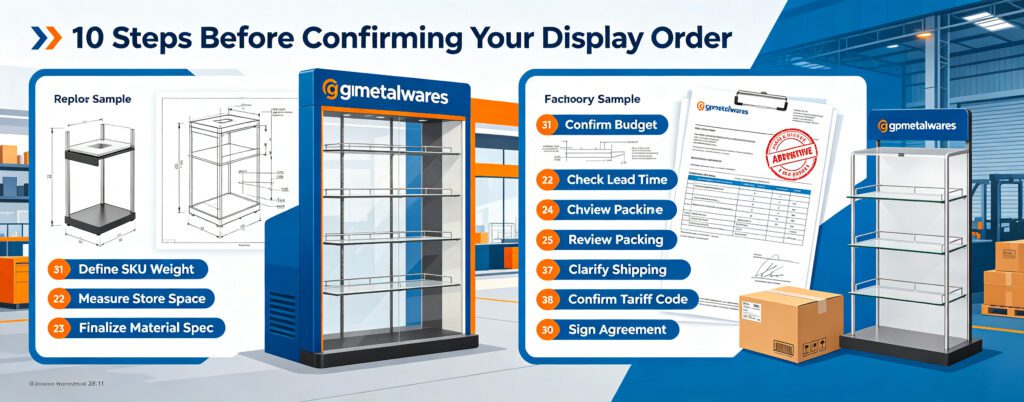
In short, thorough pre‑order preparation cuts most retail‑fixture sourcing risks. Finish your RFQ brief, and lock dimension, material and load‑bearing specifications. Sort branding artwork files and clarify all OEM‑ODM customization boundaries. Vet factory strength through third‑party Google and platform‑showroom resources. Secure transparent quotation breakdown, sample policy and payment‑term agreements. Write clear QC acceptance standards and pre‑shipment inspection arrangements. Confirm shipping terms, export packaging and import‑compliance supporting documents. Generic quick‑fire orders often deliver fixtures that miss your retail‑merchandising goals. Take time to complete each checklist item before you sign formal purchasing contracts. Visit Verified Factory Showroom (Made‑in‑China):https://www.made‑in‑china.com/showroom/gpmetalwares to send your detailed project RFQ.