Verified DDL Factory Showroom (Made‑in‑China):https://www.made‑in‑china.com/showroom/gpmetalwares
Why Scratches Ruin Custom Retail Display Fixtures For Global Buyers
Scratches turn high‑end retail display racks into rejected goods quickly. Even tiny surface marks hurt brand image for counter top POS display orders. Many overseas importers face unexpected losses after sea freight shipments. They spend heavily on OEM custom metal retail display rack and acrylic retail promotional stand products. Yet simple transit damage cuts retail sales conversion right away. Cosmetic metal display rack and illuminated LED retail promotional display hold strict visual standards. Buyers cannot place scratched fixtures inside brand flagship stores or shopping mall pop‑up booths. On top of financial loss, scratch issues delay store launch timelines for retail partners. Hence reliable China custom display manufacturers build full safeguards long before shipment day.
Start Anti‑Scratch Work During Pre‑Shipment In‑House Assembly Testing
Before any packing step, skilled teams complete full unit assembly inside the workshop. This practice comes from decades of in‑store merchandising manufacturing experience. First workers check every edge of custom branded retail pop display fixture for sharp burrs. Burrs will scrape acrylic sheets, MDF boards or metal frames during container vibration. Next staff run surface texture check alongside standard load‑bearing weight test. Meanwhile quality teams inspect anti‑scratch coating layers applied on finished units. If coating flaws appear, items go back for re‑finish instead of moving onward. As a result, hidden factory‑origin scratches get removed before packaging starts. This multi‑layer quality control system lowers later transit risk greatly for heavy‑duty SPCC steel retail display fixture.
Pick Right Inner Protective Materials For Mixed‑Material Display Racks
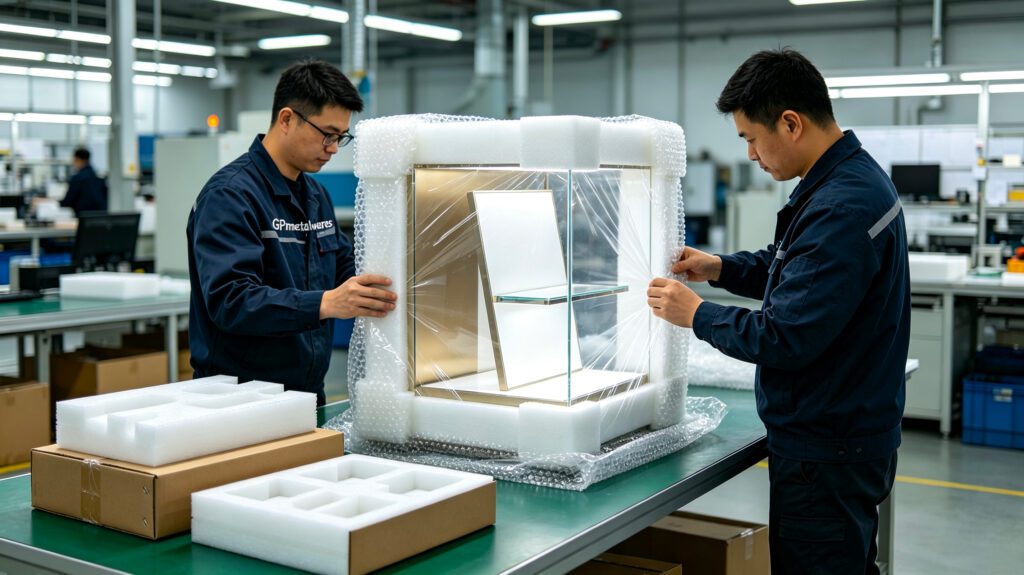
Most bespoke retail display stand combine multiple raw material types at once. Metal frames pair with solid wood veneer panels, glossy matte acrylic sheets and tempered display glass. Each material reacts differently against friction inside shipping cartons. For acrylic brand showcase pieces, factory teams wrap each component with thick foam sheets first. Soft bubble wrap covers painted metal surfaces of custom retail store shelf fixture. Cardboard corner protectors shield all protruding edges and sharp corners. Furthermore separate PE protective film sticks onto finished painted or printed surfaces. Workers keep this film intact until end‑users unpack goods at retail locations. Even small parts like waterproof LED light strips get individual foam pouches. Without tailored inner protection, parts rub together and create heavy scratches across one order.
Optimize Outer Carton & Crate Packing For Sea And Land Cross‑Border Shipment
After inner wrapping finishes, factories move on to heavy‑duty outer packaging design. For large freestanding floor display stand, custom‑fit plywood crates become the top choice. Smaller counter‑top items go into reinforced five‑layer corrugated cardboard boxes. Inside each crate, fill void spaces with shock‑absorbing packing filler material. This step stops components from shifting when vessels rock or trucks bump roads. In addition dividers separate individual units inside shared crates to avoid surface contact. Factories also mark crate sides with clear handling labels for port and warehouse staff. Though good packing adds small extra cost, it avoids huge claim fees for DDP, CIF or FOB term shipments. Export percentage over 90% factories such as Gpmetalwares Co., Ltd prioritize crate quality for North America and EU markets.
Avoid Secondary Scratches Through Smart Loading At Factory Warehouse
Great packing still fails if loading teams stack containers without care. Therefore well‑run Chinese display factories set clear container loading rules. Heavier metal retail shelf for supermarket merchandising sit at container bottom. Lighter acrylic and wooden product display rack stay stacked on upper crate layers. Workers place foam buffer sheets between stacked crates as extra safety barrier. Moreover teams forbid dragging finished crates across concrete warehouse floors. Dragging action scuffs crate exteriors and transfers impact onto inner display fixtures. Next staff secure full crate stacks with tension straps to limit movement during transit. These small loading habits cut scratch‑related damage rate for OEM and ODM bespoke retail display projects.
Pre‑Shipping Simulation Checks Help Spot Hidden Transit Risks
Some qualified manufacturers run simple vibration simulation before dispatch. This test mimics real jostling from ocean freight and overland truck delivery. After simulation cycles, quality staff open sample crates and inspect all surfaces. They check wood veneer panels, UV‑printed logo areas and acrylic showcase panels closely. If new scratches show on samples, teams revise wrapping or crate design immediately. Even with ISO 9001 and ISO 14001 certification, simulation adds practical real‑world value. This step works well for complex set‑ups like mobile display cart with rolling casters and themed demo display booths. Such multi‑part fixtures hold higher scratch risk across moving joints and corners.
What Buyers Can Do To Prevent Scratches After Goods Arrive At Destination
Scratch prevention responsibility does not end at factory gate or Shenzhen port. Once containers reach buyer warehouses, follow simple unpacking best practices. Never drag full crates across rough concrete warehouse ground. Open crates with plastic pry tools instead of sharp metal crowbars. Sharp metal tools easily nick acrylic retail promotional stand surfaces during unpacking. Keep original inner foam, film and corner guards until full retail installation. Do not peel off surface protective film too early inside busy warehouse zones. Also store unpacked components on soft pallets rather than bare hard floors. These quick actions protect custom retail display fixture right up to shop floor installation.
Final Thoughts: Anti‑Scratch Solution Covers Full Manufacturing‑to‑Delivery Chain
Resolving retail display scratch problem cannot rely on one single trick alone. It blends workshop quality inspection, material‑specific wrapping, strong outer crates, careful loading and buyer‑side handling. Factories that only focus low production cost often skip these critical protective steps. In return their overseas clients face scratched metal, wood and acrylic display units upon arrival. When you source custom retail display fixtures from verified China manufacturer, ask for full anti‑scratch packing protocol. Confirm they run pre‑shipment assembly inspection and sample vibration testing. Reliable partners like Gpmetalwares Co., Ltd combine decades manufacturing know‑how with strict multi‑step safeguards. This full‑chain approach protects your counter top POS display, LED promotional display and branded retail pop display fixture across long‑haul global transport, so your finished retail fixtures arrive ready for in‑store merchandising and better sales conversion.