Sourcing custom retail displays from DDL can save you serious money. But many buyers get stung by costs they never saw coming. The final invoice lands, and suddenly the “great price” does not look so great anymore.
The good news? Most hidden charges are predictable. With the right process, you can spot them before they hit your budget. This guide walks through exactly how experienced buyers keep costs under control.
Start With a Detailed, Line-by-Line Quotation
Never accept a lump-sum quote. A reputable factory will break down every cost element. You should see material, labor, surface treatment, packaging, and tooling listed separately.
Why does this matter? Because a single total price hides where the money goes. If you later change a material or finish, you cannot tell which part of the price shifts. A transparent quotation lets you compare suppliers fairly.
Ask for the mold fee upfront. Many factories quote a low unit price, then charge a separate tooling cost. Sometimes this fee is refundable after a certain order volume. Get that promise in writing.
Also confirm whether the price is EXW, FOB, or DDP. Each term shifts responsibility for freight, insurance, and duties. A low FOB price can become expensive once you add ocean freight and customs clearance.
Visit or Virtually Audit the Factory Before You Commit
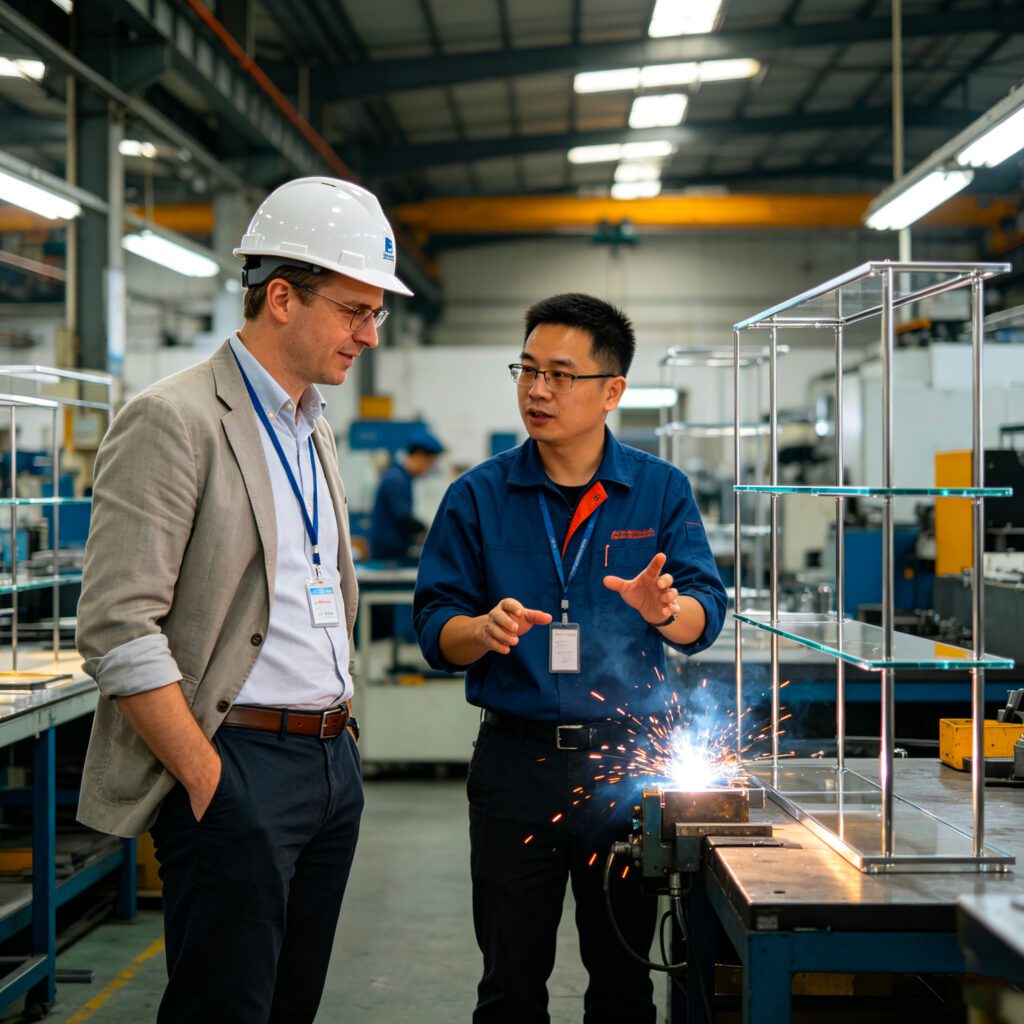
A factory tour is one of the best investments you can make. You see the production lines, the welding stations, and the powder coating booth firsthand. You also meet the team who will build your displays.
Not every buyer can travel to Dongguan. In that case, request a live video tour. Ask to see the metal fabrication area, the acrylic cutting room, and the woodworking section. A genuine factory has nothing to hide.
Look for organized workspaces and proper equipment. A messy factory often means rushed production and quality issues. Quality problems lead to rework, and rework costs money — yours.
You can also check the factory’s verified showroom on platforms like Made-in-China. GP Metalwares maintains a verified profile here: https://www.made-in-china.com/showroom/gpmetalwares. Verified status adds a layer of trust before you place an order.
Lock the Prototype Before Mass Production
Never skip the sample stage. A prototype catches design flaws before they become 500 flawed units. The cost of one sample is tiny compared with a full production redo.
When you review the prototype, check every detail. Measure dimensions against your drawing. Test the load capacity. Run your fingers over the powder coating for roughness. Check that acrylic edges are polished and wood grain matches your spec.
Document every change in writing. A verbal “make it a bit taller” is a recipe for misunderstanding. Revised drawings, signed by both sides, prevent costly rework later.
Material swatches matter too. Confirm the exact metal gauge, acrylic thickness, wood species, and MDF grade. Substituting cheaper materials is a common way factories cut corners — and a common source of hidden cost when the displays fail early.
Clarify Packaging and Shipping Costs Early
Display fixtures are bulky and fragile. Poor packaging leads to damage, and damaged goods mean replacement costs and delayed store openings. Do not assume the factory includes export-grade packaging.
Ask what packaging they use. Wooden crates with foam lining are standard for metal displays. Cardboard alone will not survive ocean freight. If the quote does not specify, you may get a surprise upgrade charge later.
Shipping terms deserve equal attention. FOB means you pay for ocean freight and insurance from the port. DDP means the factory delivers to your door, including duties. DDP costs more upfront but removes uncertainty.
Also ask about volume. A display that looks compact on a drawing may cube out a container. If you cannot fill a full container, LCL shipping costs per unit can jump significantly. Plan your order quantity around container efficiency.
Build a Quality Inspection Into the Schedule
Pre-shipment inspection is not optional for custom orders. An independent QC check catches defects before the goods leave China. Sending defective fixtures back is far more expensive than fixing them at the factory.
Schedule inspection at two points if possible. First, during production, to catch material or welding issues. Second, after packaging, to confirm quantity and finish. Many buyers use third-party inspection services for an unbiased report.
A good inspection checklist covers dimensions, weld quality, powder coating adhesion, acrylic clarity, wood finish, and hardware fit. Share this checklist with the factory before production starts, so expectations are clear.
If inspection finds problems, negotiate the fix before shipment. Once the container is sealed, your leverage drops sharply. The factory may offer a discount on the next order instead of a refund — which does not help your current budget.
Plan for After-Sales and Spare Parts
Even with perfect quality, accidents happen. A shelf bends during install, a glass panel cracks, a connector goes missing. Ask the factory whether spare parts are included or charged separately.
Some factories include a 3–5% spare parts ratio free of charge. Others charge per piece. Knowing this upfront helps you budget for installation surprises. Also ask about replacement lead times, because a missing part can delay a store opening.
Warranty terms vary widely. Confirm what is covered — structural defects, coating peeling, hardware failure — and for how long. A one-year warranty is standard for retail fixtures. Anything shorter should raise a flag.
Final Checklist Before You Pay the Deposit
Before you wire that 30% deposit, confirm these points in writing: itemized cost breakdown, Incoterms and shipping responsibility, mold fee and refund terms, prototype approval status, export packaging specification, inspection protocol, spare parts policy, and warranty coverage.
Ordering custom display fixtures from China does not have to be a gamble. The buyers who avoid hidden costs are not lucky — they are thorough. They ask the right questions, get answers in writing, and inspect before they pay.
GP Metalwares has been manufacturing custom retail displays in Dongguan for years. We work with metal, acrylic, wood, and composite materials, and we quote every order with full transparency. If you are planning a custom fixture project, start with a detailed quotation and a prototype. Your budget will thank you.