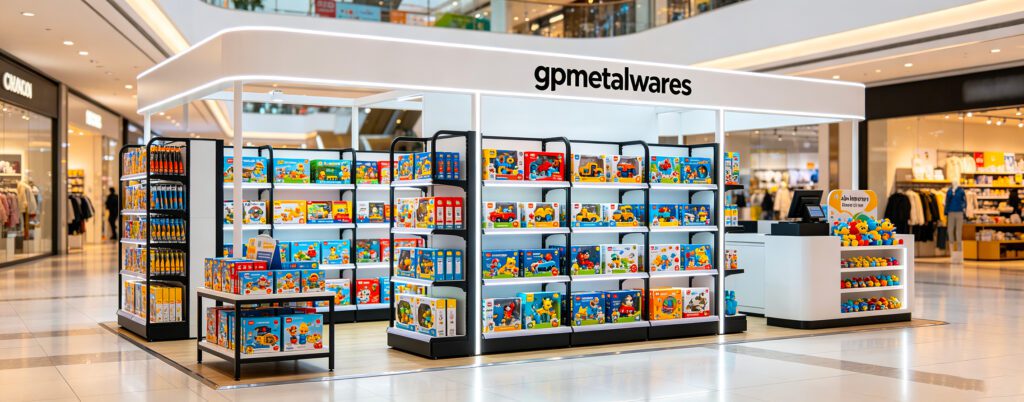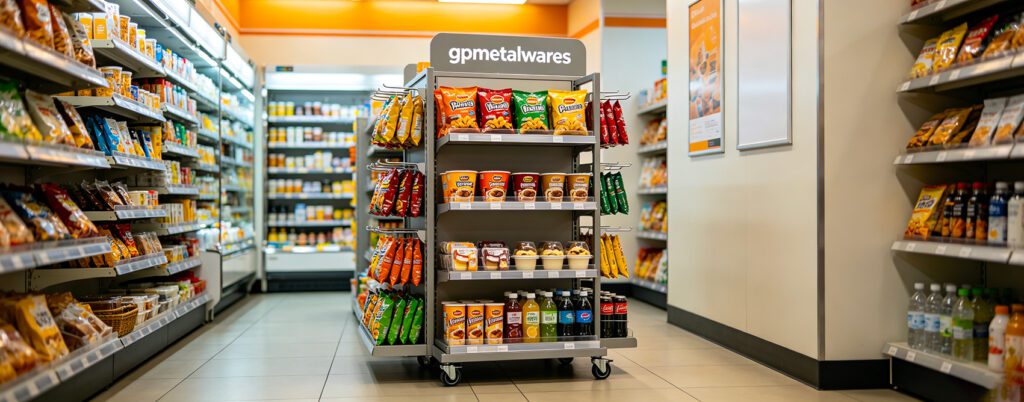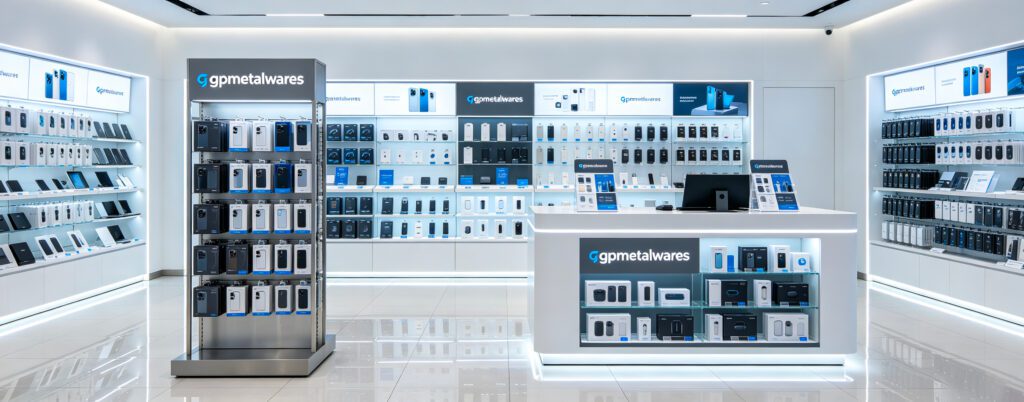
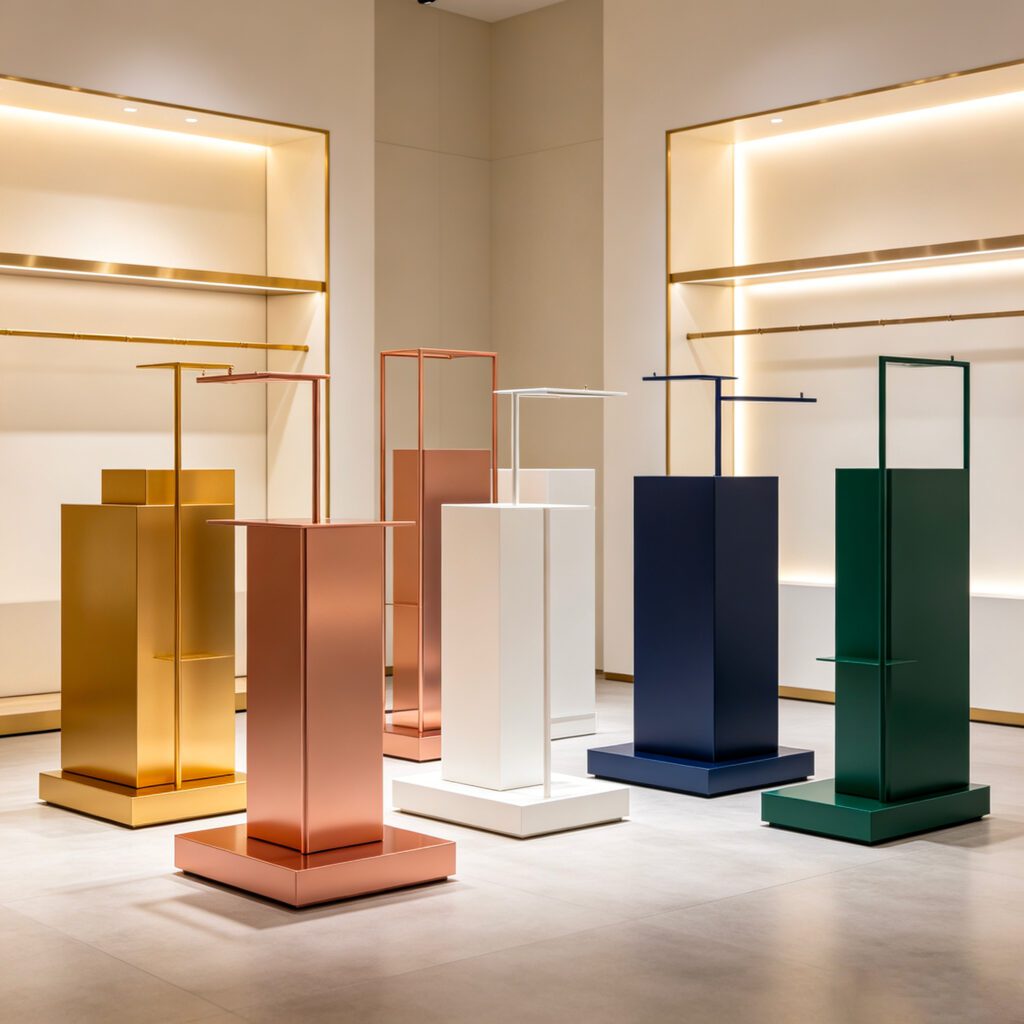
For context, brand‑specific colors shape how shoppers perceive retail POP fixtures. Many overseas buyers overlook powder coating quality during fixture sourcing work. Meanwhile, poor color matching can ruin an otherwise well‑built custom metal POS display stand. Correspondingly, reliable in‑house coating lines become a key factory evaluation marker. Furthermore, third‑party factory profiles add extra credibility for procurement teams. You can review Verified Factory Showroom (Made‑in‑China):https://www.made‑in‑china.com/showroom/gpmetalwares for real‑world facility insights. This post shares practical sourcing tips around powder coating color customization from GP Metal Wares based in Dongguan.
Why Powder Coating Matters For Retail POP Display Fixtures
Secondly, powder coating acts as both decorative finish and protective metal barrier. It resists scratches, store scuffs and light corrosion inside busy retail spaces. On top of that, retail fixtures face constant touching, cart bumps and daily wear from shoppers. Correspondingly, cheap spray paint will chip or fade after a few months of store operation. Furthermore, outsourced coating services often bring inconsistent shade across batch runs. For context, many factories outsource coating work to local third‑party workshops. Those set‑ups lose direct control over color accuracy and processing standards. By contrast, gpmetalwares.com runs its own full powder‑coating production line on‑site. Every pegboard tool hardware rack and custom metal POS display stand gets finished in‑house. This eliminates middle‑man risks for global retail brand clients.
Full Color Reference Options For Custom Powder Coating
To begin with, buyers have multiple reliable ways to lock in their target coating shade. Standard RAL color codes serve as the most widely used global reference system. Meanwhile, Pantone brand colors work well for strict brand‑identity retail campaigns. Correspondingly, you may also send physical color chips or finished product samples for matching. Furthermore, the engineering team uses spectrophotometer tools for precise color measurement. On top of that, they produce small test panels for client approval before mass production. These pre‑production samples apply to cosmetic acrylic counter display metal frames and snack wood laminate shelf metal bases alike. Even security camera retail showcase metal structures follow this same sample‑approval workflow. By contrast, small subcontract workshops often skip formal panel‑approval steps. That shortcut creates expensive color mismatch issues for finished retail orders.
Gloss And Texture Variations Beyond Plain Solid Colors
Secondly, color customization is not limited to basic flat solid shades. Buyers can select different gloss grades to fit their store visual themes. On top of that, matte, semi‑gloss and high‑gloss finishes sit within the factory’s standard range. Correspondingly, textured powder coats also mask minor metal surface imperfections. Furthermore, hammer tone, orange peel and fine matte grain textures are available for selection. For context, liquor spiral display rack and smart home floor demo fixture often use textured coats. These textures hide scuffs that frequently appear inside high‑traffic retail aisles. Meanwhile, coastal market orders can select anti‑rust enhanced powder formulations. Those special blends slow salt‑air corrosion for long‑term in‑store usage. Every texture option gets tested on sample panels before full‑scale manufacturing begins.
Batch‑To‑Batch Color Consistency Under ISO 9001 QC Standards
To begin with, repeat retail roll‑outs demand identical color across separate production batches. Many buyers run multi‑store launches split across several production cycles. Meanwhile, outside coating vendors may shift pigment ratios between different order runs. Correspondingly, subtle shade gaps appear between early and later fixture shipments. Furthermore, gpmetalwares.com follows ISO 9001 protocols for powder coating management. On top of that, they store approved powder formulas and reference panels for repeat orders. Every new production batch compares against the archived master color sample. Teams cross‑check metal sections for custom metal POS display stand against original references. Even mixed‑material builds keep metal frame tones aligned with brand guidelines. By contrast, factories without archived reference systems risk drifting color shades over repeat orders. Such inconsistency breaks unified brand look across your retail store network.
Practical Sourcing Tips For Your Powder Coating Color Requests
Secondly, clear communication cuts most common powder‑coating project headaches. Always share formal color codes or physical sample chips in your early quote phase. On top of that, note your target gloss level alongside your primary color reference. Correspondingly, mention your target sales region to pick suitable powder material grades. Furthermore, outdoor retail zones need UV‑stable powder to prevent sun‑fading issues. For context, indoor mall POP displays can use standard indoor powder coating formulas. You should always request physical coated sample panels before confirming mass production. Never rely purely on digital screen previews for your final color judgment. Screen brightness will distort real‑world powder coat shade appearances. Even small projects for pegboard tool hardware rack benefit from this sample step. These simple steps help you avoid costly full‑order rework later in your project cycle.
How In‑House Coating Supports One‑Stop Retail Display Workflow
To begin with, integrated in‑house coating supports the factory’s one‑stop retail display model. Design, metal cutting and powder coating sit under one single facility roof. Meanwhile, project leads track coating progress together with drawing revisions. Correspondingly, there is no waiting time for third‑party coating vendor scheduling slots. Furthermore, sample turnaround stays within the factory’s standard 10‑day sample window. On top of that, adjustments for cosmetic acrylic counter display metal frames move fast. Teams can tweak coating parameters without coordinating with outside subcontract contacts. Every finished security camera retail showcase undergoes visual color inspection before packing. By contrast, multi‑vendor chains create delays whenever color adjustments become necessary. Outside coating shops often hold long lead‑times for small revision batches. In‑house workflows keep your retail fixture roll‑out timeline on predictable track.
Final Takeaways For Powder Coating Customization Sourcing
For context, many procurement teams focus only on fixture dimension and structural strength. Meanwhile, surface coating quality heavily shapes your retail display’s real‑world lifespan. Correspondingly, in‑house powder‑coating capacity marks a strong China display factory custom size rule indicator. Furthermore, always verify color matching workflows and sample‑approval procedures early. On top of that, check third‑party factory showroom resources like Verified Factory Showroom (Made‑in‑China):https://www.made‑in‑china.com/showroom/gpmetalwares to cross‑check real facility capability. Reliable partners support RAL, Pantone and physical‑sample color matching services. They deliver gloss and texture options for custom metal POS display stand, pegboard tool hardware rack, cosmetic acrylic counter display, smart home floor demo fixture, security camera retail showcase, snack wood laminate shelf and liquor spiral display rack. Consistent batch‑to‑batch color preserves your brand image across global retail locations. Skipping these coating checks can lead to avoidable budget loss and project delays for your retail campaign.