Introduction
Retail display fixtures such as Song face tough wear from daily store operations. Shoppers touch shelf edges, shopping carts bump unit bases, and indoor lighting fades ordinary paint fast. More global retail brands also raise strict eco requirements for supply chains now. Many large clients such as L’Oréal, Adidas and Samsung will reject displays with excessive volatile organic compounds. For Chinese metal, wood and acrylic display workshops, upgrading coating processes is no longer optional. It directly decides whether manufacturers can secure long-term overseas bulk orders. Local production teams have spent years adjusting spray workflows, raw material selection and curing setups. Mature environmentally friendly coating solutions already serve mass retail display export orders across North America, Europe and Southeast Asia. This blog breaks down real workshop practices, common technical tweaks and business advantages brought by eco coating for POS display production.
Why Traditional Coating Falls Short for Export Display Orders
Most early small workshops used ordinary solvent-based paint for metal display frames. This coating material carries high VOC content. During spray application, strong chemical fumes fill the production bay. Factory workers need heavy respiratory protection for long shifts. Wet paint also releases residual gas after products get shipped to retail stores. Many EU and US retail landlords set hard VOC caps for all in-store fixtures. Shipments using regular solvent paint will get seized at customs directly. Beyond emission issues, traditional coating brings unstable surface quality too. Wood and acrylic attachment parts on POS displays easily develop paint blisters under thick solvent paint layers. Humid ocean transit creates micro bubbles underneath the coating, which leads to costly rework or full order returns. In addition, leftover paint and cleaning waste from old coating systems require complicated hazardous waste disposal. Waste treatment fees take up a notable portion of workshop operating cost each year. These pain points push Chinese display producers to shift toward greener coating alternatives steadily.
Core Eco Coating Options Widely Adopted in Domestic Display Workshops
Water-Based Paint for Steel Display Main Frames
Water-based paint replaces most toxic solvent with purified water as the carrier base. It cuts total VOC output by roughly 70% compared to conventional enamel paint. Most SPCC steel POS display frames use this coating at mid-to-large production facilities. Workshop operators adjust spray gun pressure first for water-based paint. This material has higher surface tension than solvent paint, so lower spraying pressure prevents uneven paint runs. Two thin coating passes replace one thick single coat in standard workflows. After spraying, parts go into low-temperature curing ovens set between 60 to 80 degrees Celsius. The gentle heating avoids warping thin steel sheet components. Finished coating forms a scratch-resistant hard film that holds up well against supermarket trolley collisions. Major retail buyers also accept water-based coating test reports easily during supplier audits.
Powder Coating for High-Durability Commercial Shelving
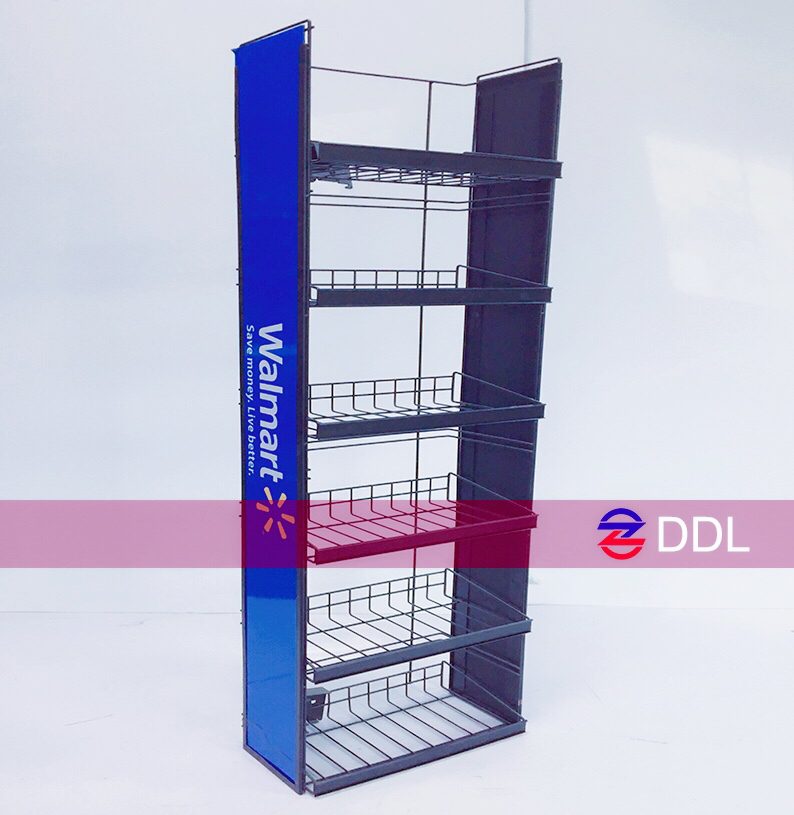
Powder coating ranks as the most popular zero-liquid eco option for heavy-duty retail display racks. The process uses dry resin powder applied via electrostatic spray. No liquid solvent exists in the whole coating stage, so VOC emission is nearly zero. Over-sprayed powder gets collected through recovery systems inside the spray booth. Factories recycle over 95% of surplus powder for later batches to cut raw material waste. Coated steel frames cure at around 180 degrees Celsius inside sealed ovens. The finished film has strong resistance to scuffs, UV light and common store cleaning chemicals. Many Walmart and convenience store display rack orders specify powder coating as a mandatory finish. One minor limitation applies to mixed-material units. Wood and acrylic inserts cannot endure high curing heat, so producers separate metal frames from softer attachments before powder work. They mount non-metal parts after all thermal coating steps finish. This simple segmentation lets workshops leverage powder coating for core structures while protecting delicate accessory pieces.
Low-VOC UV Coating for Wooden and Acrylic Display Panels
Wooden shelf boards and acrylic sign panels require softer coating systems to avoid thermal damage. UV curing low-VOC coating fits this demand perfectly inside Chinese workshops. The coating formula uses minimal reactive diluents with very low volatile content. Workers spray thin coats onto cut wood or acrylic panels. Then UV lamp arrays trigger instant resin crosslinking within seconds. No long oven curing cycle is needed. Fast processing lifts daily workshop output greatly. The cured surface resists fingerprint marks which is ideal for high-traffic retail POS displays. Cosmetic brand clients often select UV coating for product demo shelves. It keeps display surfaces clean looking through months of customer testing and touching. Waste generation stays minimal because UV coating has almost no evaporative loss during curing. Smaller workshops can install compact UV curing lines without large facility renovations.
Key Workshop Process Adjustments to Stabilize Eco Coating Output
Spray Booth Air Circulation Upgrades
Eco coating materials have unique curing and dust sensitivity needs. Workshops first retrofit sealed spray booths with multi-stage filter ventilation systems. The air intake pulls outdoor air through HEPA filters to remove fine dust particles. Tiny dust specks would create visible blemishes on smooth water-based or UV coating surfaces. Exhaust flow passes through activated carbon filters before outdoor discharge. This setup meets local industrial emission standards for paint workshops. Closed booth design also stops sudden humidity shifts from affecting wet water paint during application. Production managers note defect rates drop around 22% after booth retrofits for eco coating workflows.
Raw Material Pre-Treatment Before Coating
Clean substrate surface is critical for eco coating adhesion. For steel display frames, operators run full degreasing and iron phosphate conversion treatment. They wash off manufacturing oil residue and form a micro crystalline bonding layer on steel surface. Wooden panels receive sanding plus anti-dust sealing primer before top coating. Acrylic parts go through mild plasma surface activation. These pre-treatment steps prevent peeling for low-VOC coatings which have weaker natural penetration than solvent paint. Many overseas buyers request full pre-treatment records alongside coating test certificates for order validation. Standardized pre-treatment also reduces post-delivery coating failure claims for export manufacturers.
How Eco Coating Boosts Export Business for Chinese Display Manufacturers
First, eco coating helps suppliers clear strict customs checks across developed markets. Shipments with complete VOC and coating safety documentation face far fewer inspection hold-ups. Second, major retail chains including beauty, apparel and electronics brands maintain approved supplier lists with eco coating prerequisites. Workshops with mature green coating lines gain priority access to RFQ projects from these buyers. Third, long-term operating cost improves despite moderate initial equipment investment. Recyclable powder coating and reduced hazardous waste disposal create steady yearly savings. Meanwhile, modern shoppers favor sustainable retail setups, so brand clients actively source eco-finished display fixtures to polish their public green image. Chinese workshops that master these coating technologies turn environmental compliance into a clear competitive edge against overseas fixture producers.
Common Pitfalls When Implementing Eco Coating for Display Production
Some new workshops rush material switch without workflow adjustment and run into avoidable issues. Water-based paint will sag if teams keep using spray settings for old solvent paint. UV coating yields hazy finish when ambient dust control remains poor inside work zones. Powder coating causes component warping if staff attach wood parts before oven curing. The most effective fix comes from small trial batch testing before mass order production. Factories produce sample display pieces with target coating, send samples for third-party VOC testing and simulate long shipping storage conditions. Teams refine spray pressure, curing time and part assembly sequence based on trial feedback. This low-risk practice prevents costly mass production errors for large retail display contracts.
Closing Outlook for Eco Coating in Retail Display Manufacturing
Sustainability requirements across global retail will only grow stricter in coming years. More regional markets will roll out tighter emission rules for imported store fixtures. Chinese production workshops already hold solid practical experience optimizing eco coating for mixed metal, timber and acrylic POS displays. Continuous minor refinements to spray equipment, material formulations and quality check systems will further lift process stability. For fixture suppliers, investing in environmental coating technology is not merely a compliance chore. It builds durable production capability that supports steady expansion into high-value international retail client networks for many years ahead.