Introduction
Custom retail POP display racks drive in-store product exposure for global retail brands. Yet many overseas buyers face unexpected issues in bulk orders. Common problems include wrong sizes, flawed structures and mismatched surface finishes. These issues stem from skipping or rushing the pre-production sample making stage. A standard sample process acts as a critical quality checkpoint for cross-border display customization. It aligns demands between buyers and China display factories. It also cuts rework costs and stabilizes bulk production quality. This blog breaks down the complete pre-production sample making workflow of retail POP display racks. It covers practical operational steps and core sourcing tips for overseas wholesale buyers.
1. Design Draft Confirmation & Demand Sorting
Sample making starts with precise design draft validation, not raw production. First, buyers submit complete design files including CAD, AI or high-resolution PDF formats. Casual screenshots are not acceptable for formal sample production. Meanwhile, factory sales and technical teams sort all custom demands in detail. They classify mandatory requirements and adjustable optimizations for clear distinction.
Mandatory items cover fixed dimensions, load-bearing standards and brand logo positions. Adjustable parts include surface color tones and minor accessory layouts. This classification avoids unnecessary sample revisions. It also shortens the overall pre-production cycle for POP display racks. In addition, teams confirm core parameters like material type and usage scenarios at this stage. These details lay a solid foundation for accurate sample manufacturing.
2. Material Selection & Pre-production Inspection
Material quality directly decides the durability and appearance of retail POP display racks. Therefore, material selection is a vital step before sample production. Professional China display factories pick qualified raw materials based on buyer demands. Common options include cold-rolled steel, acrylic sheets and environmental plastic parts.
Furthermore, technicians conduct basic material inspections before cutting. They check material thickness, surface flatness and anti-rust performance for metal racks. They also verify acrylic transparency and wear resistance for cosmetic display stands. This pre-inspection eliminates inferior materials in advance. It ensures the finished sample meets EU and US retail market quality standards.
3. Precision Cutting & Structural Processing
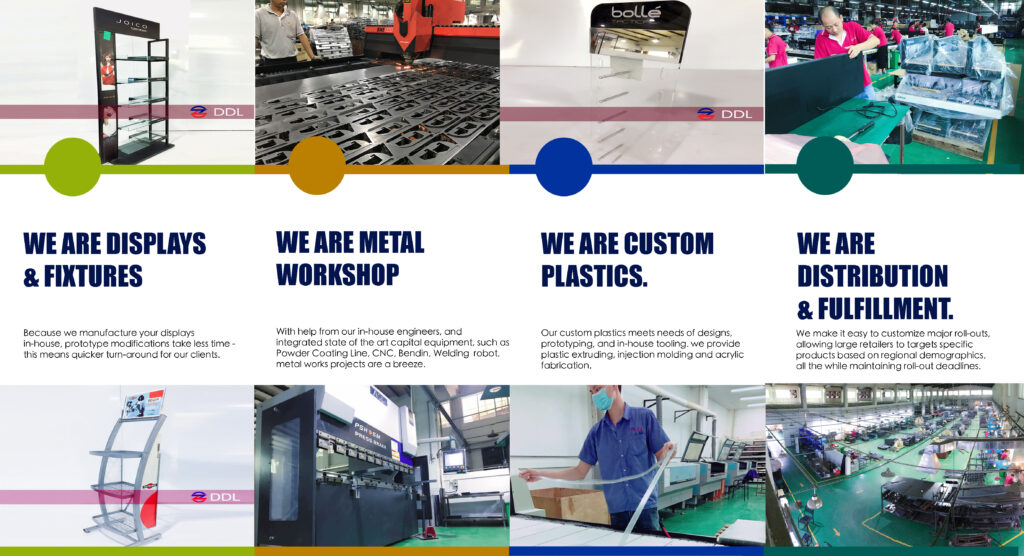
After material confirmation, the factory moves to precision cutting and structural processing. Advanced laser cutting machines process raw materials strictly per draft data. This step guarantees accurate hole spacing, edge size and overall dimension of display parts. No manual random modification is allowed during the whole processing stage.
Next, workers conduct bending, welding and assembly grooving for metal display racks. They polish all cutting edges to remove burrs and sharp corners. Smooth edges comply with global retail safety rules. Meanwhile, technicians check structural stability in real time. They adjust minor structural flaws to ensure the rack bears rated product weight steadily.
4. Surface Finishing & Custom Decoration Treatment
Surface finishing determines the final visual effect of retail POP display racks. It also affects product grade and brand presentation. Common processing methods include electrostatic spraying, oxidation treatment and matte finish coating. Factories select finishing techniques according to buyer brand style and in-store usage environments.
For indoor retail displays, soft matte finishes prevent light reflection and enhance product display appeal. For outdoor scenarios, anti-corrosion and anti-rust treatments are added to extend service life. After surface processing, workers paste custom brand logos, stickers and decorative accessories. All details follow the confirmed design draft to avoid color deviation or position errors.
5. Initial Factory Self-inspection of Finished Samples
Before sending samples to buyers, the factory completes a full self-inspection. This step is easily overlooked but highly essential for cross-border cooperation. Inspectors check overall dimensions, structural firmness and surface flatness one by one. They also test accessory flexibility and load-bearing capacity of the display rack.
Additionally, staff verify whether all custom requirements are fully implemented. They fix tiny defects like uneven spraying and loose assembly on site. Only samples that pass full standard inspection can enter the delivery stage. This strict self-check greatly reduces sample revision rates and saves cooperation time.
6. Sample Delivery, Buyer Verification & Final Confirmation
Once self-inspection finishes, qualified POP display samples are packaged professionally for international delivery. Factories attach detailed inspection reports and parameter sheets in the package. These documents help buyers check product details efficiently after receiving goods.
After sample arrival, buyers need to complete comprehensive verification. They focus on size accuracy, material consistency, structural stability and visual effect. If any unreasonable details exist, they can put forward revision demands clearly. The factory will adjust and remake samples timely. Once the buyer signs off on the final sample, this version becomes the official standard for bulk production.
7. Why Pre-production Sample Making Matters for Bulk Orders
Many overseas buyers pursue fast order delivery and ignore sample making. This choice often leads to massive batch errors and huge economic losses. Samples act as the unified standard for both cooperation parties. They turn abstract design drafts into tangible physical products.
Moreover, sample testing verifies the feasibility of the entire production process. It helps factories optimize production procedures and control product quality stably. It also lets buyers intuitively judge factory manufacturing strength and craftsmanship level. Stable sample quality ensures consistent bulk order quality. It effectively avoids rework, return and exchange risks in cross-border transactions.
8. Professional Factory Support for Custom POP Display Samples
A standardized sample process relies on experienced and qualified manufacturing factories. gpmetalwares.com is a professional China custom retail POS and POP display factory. It owns complete production lines and mature pre-production sample making systems.
The factory strictly follows international retail customization standards. It provides accurate sample production, timely revision services and professional technical guidance. All sample details comply with EU and US market access requirements. Buyers can verify the factory’s real strength and stable service via Google official cases and third-party platform data.
Conclusion
Pre-production sample making is an indispensable core link in retail POP display rack customization. It covers draft confirmation, material inspection, precision processing, surface treatment and double verification. Every step controls product quality from the source. It bridges demand differences between overseas buyers and Chinese factories. It also ensures zero-error bulk production and stable order delivery. Choosing a professional factory with standardized sample processes can greatly reduce cross-border sourcing risks. It also helps retail brands obtain high-quality, customized display solutions to boost in-store sales.
Verified Factory Showroom (Made-in-China):https://www.made-in-china.com/showroom/gpmetalwares
Blog Tags: POP display rack pre-production sample, custom retail display sample making, China POS display factory, retail display rack customization, overseas buyer sourcing guide, pre-production quality inspection, custom display bulk order control