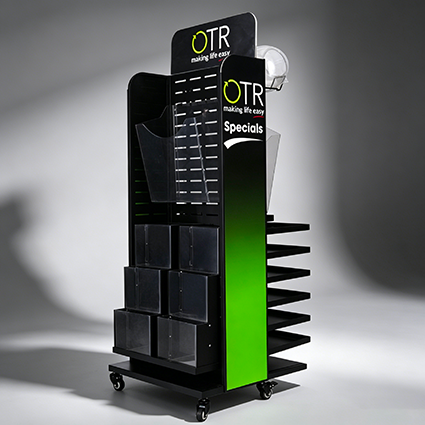
Introduction
Retail displays are core tools to showcase brand identity in physical stores. Every detail of in-store fixtures affects customer perception and brand trust. Many retailers use basic printed logos to cut production costs. Yet these simple branding methods cannot sustain long-term commercial use. They easily wear out and ruin the overall premium store aesthetic. For retail brands pursuing unified store visuals, durable custom branding is essential. China professional display factories offer premium personalized logo engraving services. This practical solution upgrades ordinary retail displays into branded high-end fixtures. This article breaks down the full advantages, production process and real value of factory logo engraving for global retail buyers.
1. Why Traditional Retail Display such as Sony Branding Falls Short
Most low-budget retail displays rely on stickers, spray paint or thermal printing. These methods work fine for short-term promotions and temporary store layouts. However, they face obvious defects in long-term offline retail scenarios. Sticker logos accumulate dust and moisture after daily store cleaning. They gradually curl, fade and create messy fixture surfaces. Spray-painted logos scratch easily during product restocking and customer interactions. Printed patterns also lose color saturation under long-term mall lighting. In turn, these flawed details reduce brand grade and affect consumer shopping experiences.
2. Key Advantages of Factory Custom Logo Engraving
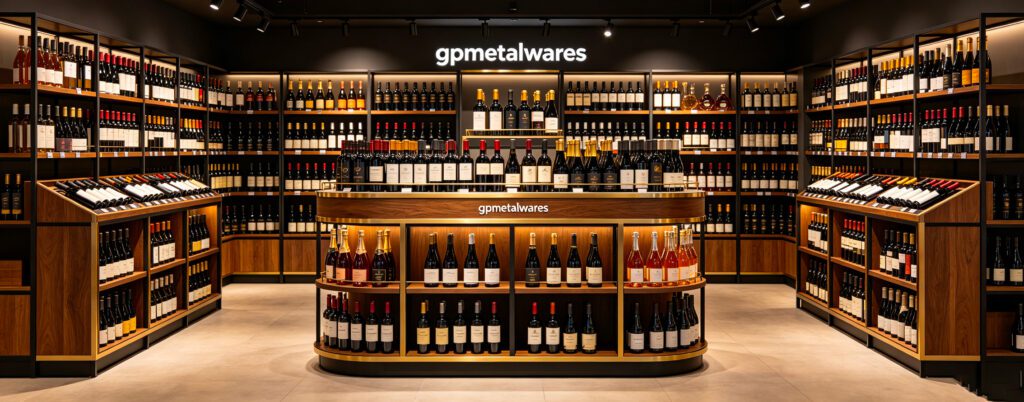
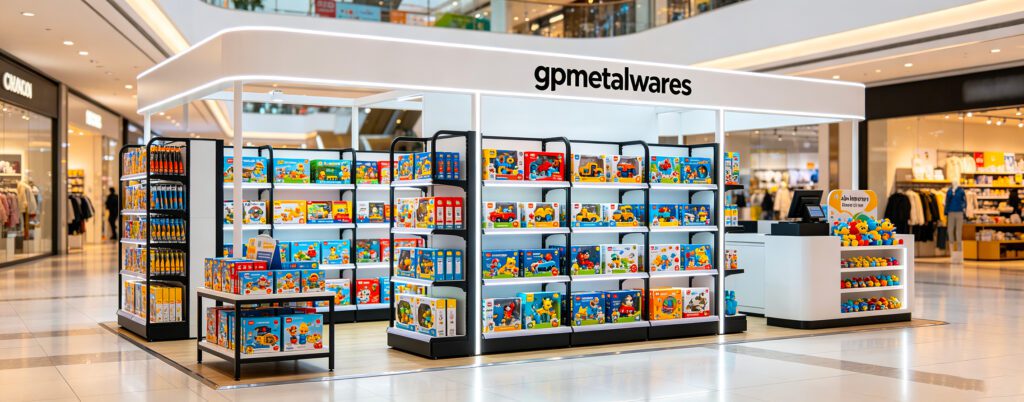
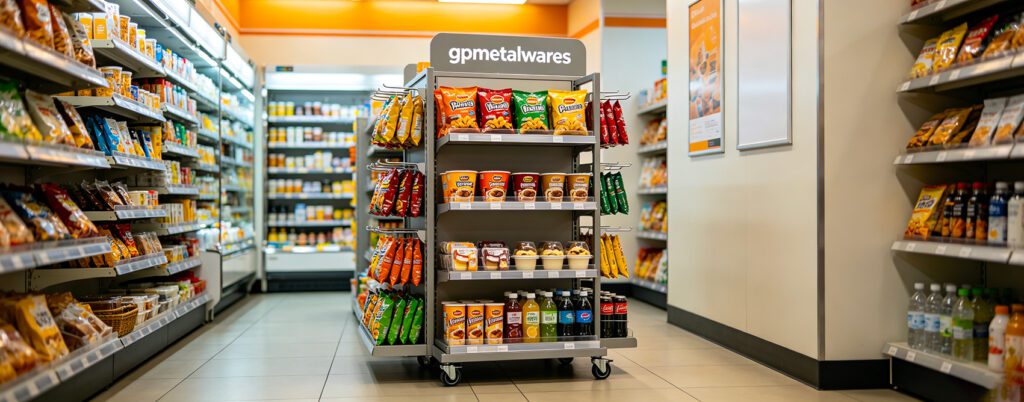
Personalized logo engraving is a permanent branding solution for retail displays. Unlike surface printing, engraving carves logos directly into fixture materials. It does not rely on external attachments or surface coatings. Thus, engraved logos will never peel, fade or deform with time. The delicate carved lines deliver a refined, high-end industrial texture. This texture matches metal, wood and acrylic retail display materials perfectly. Additionally, engraving supports ultra-fine patterns, fonts and brand icons. It helps chain stores achieve unified and standardized global display visuals.
3. Strict Pre-Production Material Screening & Polishing
High-quality engraving effects depend entirely on qualified raw display materials. Many small workshops use low-density recycled plates to save costs. These uneven materials cause fuzzy lines and broken logo details after carving. To avoid such issues, formal China factories select brand-new standard panels. Workers conduct flatness checks one by one before mass production. They polish all display surfaces to remove burrs and oxidation layers. They also wipe off oil stains to ensure a clean carving base. Consequently, every engraved logo maintains clear and uniform presentation.
4. Precise Laser Engraving Workflow for Retail Fixtures
Professional laser engraving technology dominates modern retail display customization. It replaces unstable manual carving and low-precision mechanical processing. First, factory designers optimize client vector logo files for laser recognition. Clear vector files guarantee smooth lines and complete pattern restoration. Next, workers fix display panels on professional positioning jigs. These tools prevent offset errors during high-speed engraving. Then fiber laser equipment runs constant-power automatic carving. After production, staff clean fine residual dust on fixture surfaces. Finally, QC inspectors check every logo detail under professional LED lighting.
5. Multiple Engraving Styles for Diversified Retail Branding
Different retail industries require targeted engraving style matching. Minimalist beauty and skincare brands favor shallow matte engraving. It creates a clean, gentle and high-end store atmosphere. Electronics and digital product retailers prefer deep three-dimensional engraving. It highlights brand stereoscopy and technological fixture texture. Fashion apparel stores often choose hollow-out engraving for trendy visual effects. Besides style options, factories support adjustable carving depth and logo sizes. Buyers can customize logo positions to fit different shelf and counter layouts. This flexible personalization meets all types of retail brand positioning needs.
6. In-House Engraving Avoids Third-Party Quality Risks
Many small display factories outsource engraving to external workshops. This separated production mode brings many uncontrollable problems. Outsourced teams fail to follow unified display production standards. Logo positions and carving depth often differ across product batches. Batch inconsistency causes chaotic visuals for chain store layouts. Meanwhile, third-party processing raises extra time and procurement costs. In contrast, reliable China display factories complete engraving in-house. They control every production link from design to finished inspection. This mode ensures stable quality and faster order delivery cycles.
7. Outstanding Durability for Complex Retail Environments
Offline retail spaces involve frequent friction, cleaning and light exposure. Ordinary printed logos cannot withstand long-term daily store wear and tear. Engraved logos feature superior wear resistance and anti-aging performance. They stay intact even after years of customer contact and regular wiping. For humid coastal areas and high-temperature shopping malls, extra anti-rust treatment is available. This auxiliary process protects carved details from oxidation and blurring. It greatly extends the service life of branded retail display fixtures.
8. Practical Buying Tips for Custom Retail Display Engraving
Several simple tips can help buyers get ideal engraving results. First, submit high-definition vector logo files for accurate carving restoration. Blurry pixel images will lead to rough and incomplete pattern details. Second, confirm logo size and placement with the factory in advance. Reasonable layout improves the overall coordination of store fixtures. Third, select suitable engraving styles based on brand tonality and store style. Lastly, confirm pre-production samples before bulk order manufacturing. These steps effectively avoid rework risks and save procurement costs.